From Seoul to Stardom: Why Asian Drama Actors Build Careers That Actually Last
Lee Min-ho is still selling out fan events in Los Angeles a decade after Boys Over Flowers. Song Hye-kyo remains a household name in Korean-American communities from Koreatown to suburban New Jersey. Meanwhile, try naming five American TV stars from 2010 who are still generating that kind of devoted, cross-continental buzz. It's harder than it sounds.
There's something structurally different happening in how Asian drama ecosystems build actor careers — and it's worth paying attention to, especially as more American viewers discover these shows through platforms like Netflix, Viki, and Kocowa.
Hollywood's Boom-and-Bust Problem
American television has always had a complicated relationship with its own stars. A show blows up, an actor becomes the face of a cultural moment, and then... the show ends. Or gets cancelled. Or the actor gets typecast so hard they can't escape it. Think about how many "next big things" from prestige drama golden ages have quietly drifted into supporting roles or limited-series cameos. The industry moves fast, the attention span is short, and the machinery doesn't really have a plan for what happens after the peak.
Hollywood's star-making process is often reactive rather than strategic. Agents chase buzz. Studios attach names to projects based on recent heat. There isn't necessarily a long game being played.
The Drama Ecosystem Is Built Different
Korean entertainment — and to a strong degree, Taiwanese, Thai, and Japanese entertainment — operates more like a sustained ecosystem than a hit factory. Agencies like SM Entertainment, YG, and HYBE manage talent across music, acting, and brand partnerships simultaneously. An actor doesn't just exist in one lane. They have a portfolio.
When an actor finishes a drama, there's often already a next project lined up, a brand endorsement campaign going live, and a fan meeting tour being scheduled. The career doesn't pause between projects — it compounds. Every new role adds a layer to a public identity that fans have been actively tracking and investing in.
This is genuinely different from how most American actors navigate between projects, where gaps of a year or two between visible work can feel like disappearing entirely.
Fan Communities Are Infrastructure, Not Just Noise
Here in the US, we tend to think of fandoms as a byproduct of success — enthusiastic but ultimately peripheral to how a career actually functions. In the Asian drama world, fan communities are closer to infrastructure.
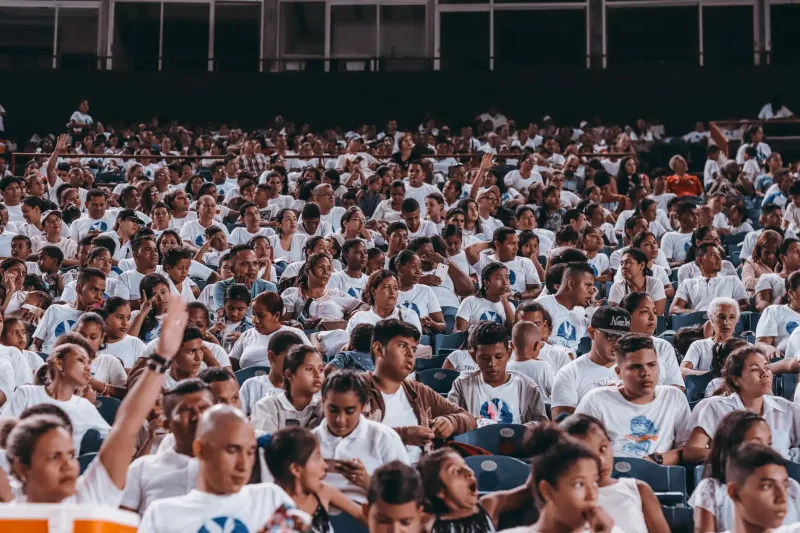
Fandoms in South Korea, Japan, and across Southeast Asia organize with a level of coordination that would make a marketing team blush. They track streaming numbers, coordinate voting campaigns for awards, and fund billboard advertisements in Times Square for their favorite actors' birthdays. Yes, really — those ads you've seen on the subway and in Times Square celebrating Korean celebrities? That's fan-organized and fan-funded.
When those fandoms extend into the US — through diaspora communities, through the general wave of Hallyu enthusiasm, through platforms like Twitter and TikTok — they bring that same organizational energy with them. An actor like Park Seo-joon doesn't just have American fans. He has American fans who are active, who are streaming his older catalog, who are buying his older dramas on physical media, who are showing up to every public appearance he makes stateside.
That kind of sustained community engagement is what keeps a name relevant long after a single show has ended.
Strategic Project Selection Matters More Than You'd Think
One underrated factor in how Asian drama actors sustain their profiles is the deliberate nature of project selection. The best-positioned actors in the Korean drama space, for example, don't take every offer. They space out projects carefully, often choosing roles that stretch their range rather than repeat their last hit.
Song Hye-kyo moving from the sweeping romance of Descendants of the Sun to the darker, more morally complex The Glory is a textbook example. That pivot reinvigorated her career in a way that introduced her to a completely new generation of viewers — including a massive new American audience who discovered her through Netflix. She didn't chase the formula that made her famous. She challenged it.
Hollywood stars, by contrast, are often pushed by studios and agents toward projects that replicate previous commercial success. The pressure to stay in a lane is intense, and it often accelerates the very typecasting that shortens careers.
The International Tour Circuit Changes Everything
Something American TV stars almost never do: tour internationally to meet fans. Asian drama actors do this regularly and deliberately. Fan meetings in Los Angeles, New York, Chicago — these aren't rare events. They're part of a career calendar.
For American fans, especially those in diaspora communities, seeing a beloved actor in person creates a depth of connection that no amount of social media engagement can replicate. It turns a parasocial relationship into something that feels genuinely reciprocal. Fans who attend these events become evangelists. They bring friends. They post about it for weeks.
This is real-world community building, and it has a compounding effect on American name recognition that is genuinely hard to manufacture any other way.
What American TV Could Learn
None of this is magic. It's a combination of structural support, strategic thinking, and genuine investment in fan relationships over the long term. American networks and studios could learn something from watching how the drama ecosystem operates — not just in terms of content, but in terms of how they treat the human beings at the center of that content.
For now, though, the gap remains. And for viewers who've discovered that Asian dramas offer not just great stories but genuinely enduring stars, that gap is part of the appeal. There's something satisfying about investing in an actor and knowing that investment isn't going to evaporate the moment a show gets cancelled.
That's not a small thing. That's the whole thing.