Patience Pays Off: How Asian Dramas Turn Slow Storytelling Into an Obsession Machine
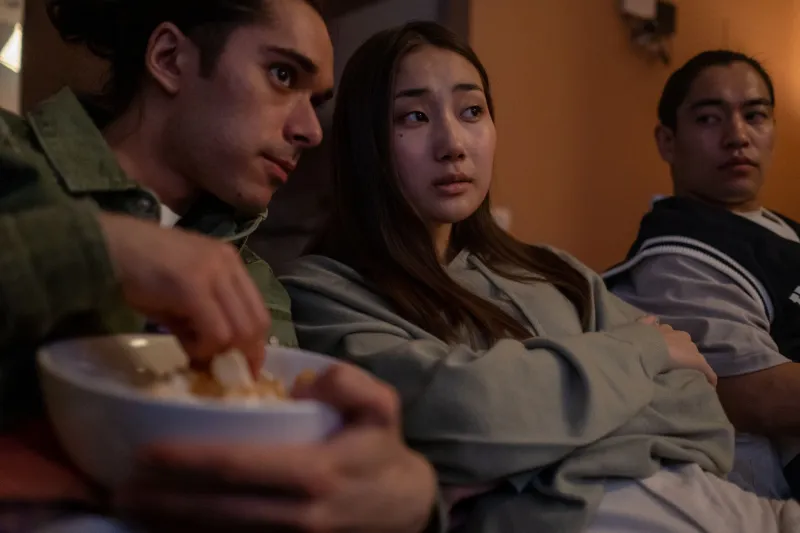
There's a certain kind of exhaustion that comes with watching American prestige TV. You're barely through the cold open before someone's been murdered, a conspiracy has unraveled, and a major character has made a decision that will apparently reshape the entire series. It's exciting, sure. But by episode four, you're already wondering if the writers can sustain the energy — and by episode seven, you've quietly stopped caring.
Now think about the last time you watched a Korean or Taiwanese drama. Maybe you complained — loudly, to anyone who'd listen — that "nothing happened" in the first two episodes. And then, somewhere around episode five, something clicked. A look between two characters. A line of dialogue that paid off a setup you'd almost forgotten. And suddenly you were canceling your Saturday plans to watch six more episodes back to back.
That's not an accident. That's a philosophy.
The Architecture of a Long Game
Asian dramas — whether we're talking about K-dramas from Seoul, C-dramas out of China, or J-dramas from Japan — operate on a fundamentally different storytelling contract than their Western counterparts. Where American TV often front-loads spectacle to grab attention in a crowded marketplace, Asian dramas invest heavily in what you might call emotional infrastructure.
Character backstories aren't just exposition dumps. They're load-bearing walls. A flashback to a character's childhood in episode three might feel like a detour, but it's quietly building the foundation for a breakdown in episode twelve that will absolutely wreck you. Subplots that seem disconnected start braiding together in ways that feel almost architectural in their precision.
This kind of storytelling requires trust — from the writers, yes, but more importantly from the audience. And here's the interesting thing: Asian drama fans tend to extend that trust willingly, because the format has earned it over decades of delivering on its slow-build promises.
Why American TV Got Addicted to the Shock
To be fair to Western television, the rapid-fire pacing isn't arbitrary. It evolved in response to real market pressures. With hundreds of channels competing for eyeballs — and now an entire internet's worth of distraction — American showrunners learned that you have about ninety seconds to convince a viewer to stay. The pilot has to be a movie. The season premiere has to top the finale. Every episode needs a water-cooler moment.
The result is television that's genuinely thrilling in short bursts but often structurally hollow. Characters exist to serve plot rather than the other way around. Shocking twists become a substitute for earned emotional payoff. And audiences, trained to expect constant stimulation, start disengaging the moment a show asks them to sit with something quiet for a few minutes.
There's also the season structure to consider. American dramas typically run ten to twenty-two episodes per season, sometimes across multiple years. That extended timeline creates pressure to pad storylines, introduce artificial conflict, and delay resolutions that should happen naturally. Fans get frustrated. They start watching ironically. They make memes about how the show "lost the plot."
The K-Drama Model: Finite, Focused, Ferocious
Most Korean dramas run between sixteen and twenty episodes — and that's it. One story, told completely, with a beginning, middle, and end. No renewal anxiety. No seasons of diminishing returns. No will-they-won't-they dragged out across four years because the network wants to keep the cash cow alive.
This finite structure is a huge part of why the pacing works. Writers can afford to spend three episodes establishing a relationship because they know exactly how many episodes they have to pay it off. Every scene is budgeted. Every emotional beat is intentional. When the slow burn finally ignites, it's because the kindling was laid with care.
C-dramas often run longer — sometimes forty or fifty episodes — but they compensate with an almost novelistic density of subplot and character work that rewards viewers who stick around. Watching a long-form Chinese historical drama can feel less like watching TV and more like reading a very good book that also has incredible costumes.
The Fan Devotion Equation
Here's where things get genuinely fascinating from a business and cultural perspective: the slower the burn, the more devoted the fan base tends to be.
Think about the communities that have built up around shows like Reply 1988, Nirvana in Fire, or Midnight Diner. These aren't casual viewers. They're people who have watched certain scenes dozens of times, who write extensive analysis posts, who introduce the shows to friends and family like they're sharing something sacred. The investment of time and emotional energy during the slow-build phase creates a kind of ownership over the story. You worked for this. You waited. When the payoff comes, it hits differently.
Compare that to the discourse around a typical American prestige drama. Fans are passionate, sure — but a lot of that passion is adversarial. Arguing about plot holes. Debating whether the finale ruined everything. The rapid-fire pacing that was supposed to keep people hooked often leaves them feeling cheated when the show can't sustain it.
Slow-burn storytelling, paradoxically, creates more patient audiences. Because patience gets rewarded, viewers learn to trust the process. They become collaborators in the story rather than consumers waiting to be entertained.
What Streaming Has Changed — And What It Hasn't
The rise of global streaming platforms has done something interesting to this dynamic. Netflix, Viki, Viu, and others have introduced Asian dramas to American audiences who might never have sought them out — and those audiences have largely adapted to the pacing rather than demanding the shows change to meet them.
That's a meaningful shift. It suggests that the appetite for slower, more deliberate storytelling was always there in American viewers. They just weren't being given much of it.
Some platforms have started experimenting with hybrid approaches — Asian dramas with shorter episode counts, or American shows borrowing the finite-season structure. But the most devoted fan communities still tend to cluster around shows that commit fully to the long game. Patience, it turns out, is a feature, not a bug.
The Takeaway
If you've ever started an Asian drama, declared it "too slow," and then found yourself completely unable to stop watching by episode six — you've experienced exactly what these storytellers are going for. That shift from skepticism to obsession isn't something that happens by accident. It's engineered, carefully and deliberately, by writers who understand that the best emotional payoffs require the longest runways.
American TV taught us to want everything now. Asian dramas are quietly teaching us that waiting for something — really waiting, really investing — makes the reward feel like it was worth every minute.
And honestly? They're not wrong.