Why Asian Dramas Look Like Movies While American TV Still Looks Like... TV
Pull up almost any recent Korean or Taiwanese drama on your streaming service of choice and pause on a random frame. Chances are it looks like a still from a film. The color grading has depth. The lighting feels intentional. The composition uses negative space in ways that feel artistic rather than functional. Now do the same thing with a random episode of a mid-tier American network drama. The difference is jarring.
This isn't just aesthetics for aesthetics' sake. The visual language of Asian dramas is doing actual storytelling work — and it's doing it in ways that American television production has been surprisingly slow to catch up with.
Color as Emotional Architecture
One of the most immediately noticeable differences between Asian drama cinematography and American TV production is how color is used. In a show like My Mister or Our Beloved Summer, color grading isn't just a finishing touch applied in post-production. It's a fundamental storytelling decision made early in the production process.
My Mister, for example, uses a deliberately desaturated, almost monochromatic palette for much of its runtime — blues, grays, washed-out browns. It mirrors the emotional exhaustion of its characters. When warmth does appear in the frame, it carries enormous emotional weight precisely because it's been withheld. The color tells you how to feel before a single word of dialogue is spoken.
Compare that approach to the visual strategy of most American procedurals or even prestige dramas, where color grading tends toward a kind of neutral consistency — professional-looking, but rarely doing anything beyond making the image look clean and broadcast-ready.
The Budget Constraint Creativity Paradox
Here's something counterintuitive: many of the most visually innovative choices in Asian drama production come directly from budget limitations. When you don't have the money to build elaborate sets or access expensive studio equipment, you find other solutions. And those solutions often end up looking more interesting than what a bigger budget would have produced.
Natural light becomes an asset rather than a problem to manage. Shooting on location in actual environments — a real mountain, a real back alley, a real market — adds texture and authenticity that a constructed set rarely replicates. Cinematographers working with tighter budgets learn to find the shot within the environment rather than building the environment around the shot.
This discipline produces a different visual sensibility. Shows like Crash Landing on You use the landscapes of their locations — whether rural Korean countryside or the more dramatically staged North Korean sequences — as active visual elements rather than passive backdrops. The environment is doing characterization work.
Lighting Design That Doesn't Look Like Lighting Design
American television lighting has long prioritized a kind of functional clarity — everyone should be well-lit, faces should be readable, no one should look accidentally bad. This is understandable from a legacy broadcast perspective, where technical standards dictated a lot of visual choices.
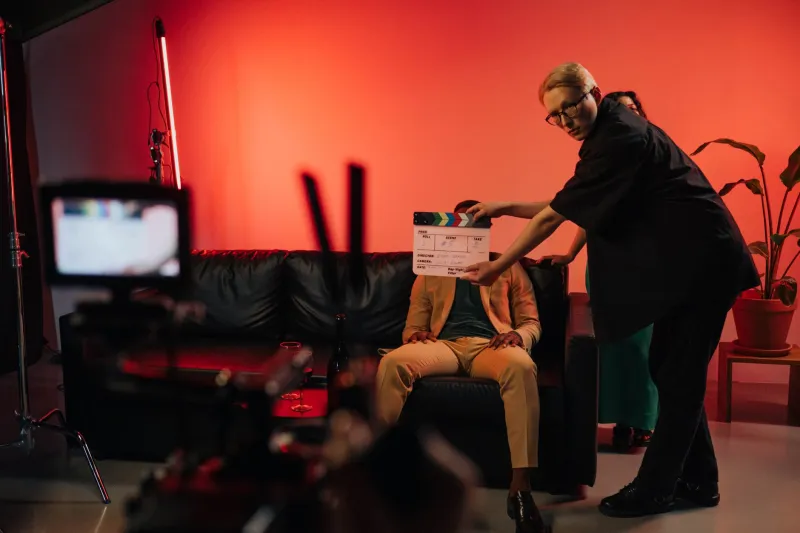
Asian drama cinematography increasingly takes a different approach. Lighting is used to create atmosphere and psychological texture, not just visibility. Shadows are intentional. Partial illumination of a face is a choice that communicates something about a character's interiority. Hard light sources — a single lamp, a neon sign, a window in a dark room — are used to create contrast that feels emotionally charged.
The technical execution of this approach has gotten remarkably sophisticated. Shows produced for platforms like tvN or JTBC in South Korea are being shot on cinema-grade cameras with cinema-grade lenses, by cinematographers who think in terms of film grammar rather than television grammar. The gap between what a high-end Korean drama looks like and what a major motion picture looks like has narrowed significantly.
What Streaming Has Changed About Visual Ambition
The shift to streaming consumption has had a liberating effect on Asian drama visual production. When your primary viewer is watching on a large 4K television or a high-resolution laptop screen rather than a broadcast TV set, the technical ceiling rises. Subtle color gradations, fine-grained texture, careful shadow detail — all of this becomes more visible and more impactful.
Streaming platforms have also freed production teams from the rigid scheduling constraints of broadcast television, where episodes need to be ready on a fixed weekly cadence regardless of production complexity. More flexible timelines allow for more deliberate visual choices — more time on location, more time in color grading, more time to get the shot right.
The results are visible. Compare the visual production quality of a Netflix-backed Korean original like Squid Game or Hellbound to almost any American network drama from the same period. The Korean productions look like they were made by people who had something specific to say visually and had the tools and time to say it.
American Networks Are Starting to Notice
The influence of Asian drama cinematography on American production is starting to show up in subtle ways. More American streaming originals are experimenting with expressive color grading. More directors are choosing location shooting over studio shooting for the textural authenticity it provides. The conversation about what television is allowed to look like has shifted.
Some of that shift is directly attributable to the visibility of Asian dramas on American streaming platforms. When millions of American viewers are watching Vincenzo or Twenty-Five Twenty-One and absorbing those visual languages as normal, the bar for what looks good on a TV screen quietly rises.
For viewers who've made the jump to streaming Asian content, the visual experience is a big part of the appeal — even for people who wouldn't describe themselves as particularly interested in cinematography. They just know it looks different. Better, somehow. More like something worth paying attention to.
That's the thing about great visual storytelling. You don't have to understand it for it to work on you.