Thread by Thread: How Asian Dramas Are Out-Dressing Hollywood on a Fraction of the Budget
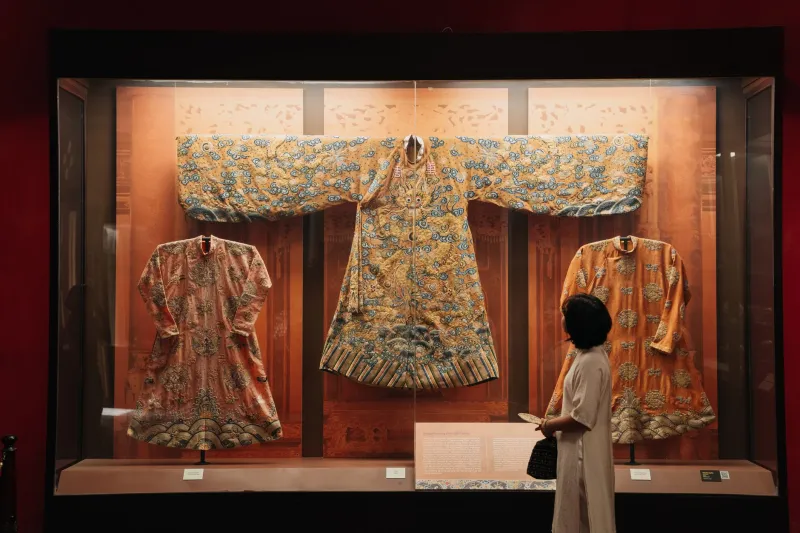
There's a moment in Under the Queen's Umbrella — maybe you've had it, maybe you're about to — where you completely forget what the characters are saying because you're too busy trying to figure out how a garment that's several hundred years old could possibly look that good on a high-definition screen in 2024. The embroidery alone looks like it took someone's grandmother six months and a magnifying glass. You rewind. You pause. You screenshot it and send it to your group chat with zero context.
That's the costume design arms race in action, and right now, Asian productions are winning it in ways that should make Hollywood's wardrobe departments a little nervous.
The Budget Math Doesn't Add Up — Until It Does
Here's the thing that confuses a lot of American viewers when they first dig into this topic: major US productions throw enormous sums at costume departments. A prestige HBO drama might spend tens of millions across a single season on wardrobe alone. So how is it that a Korean historical epic or a Chinese palace drama consistently produces looks that feel more intricate, more considered, and frankly more alive than what's coming out of studios with far deeper pockets?
The answer isn't really about money. It's about proximity to the source material.
When a Korean production studio hires a costume designer to work on a Goryeo-era drama, that designer often has direct access to museum archives, textile historians, and craftspeople whose families have been working in traditional Korean fabric arts for generations. The research isn't just academic — it's personal and cultural in a way that's genuinely difficult to replicate from the outside. Compare that to a Hollywood production attempting to recreate, say, ancient Chinese court dress, and you start to understand why the results so frequently look like a beautiful but ultimately hollow approximation.
Texture You Can Almost Feel Through the Screen
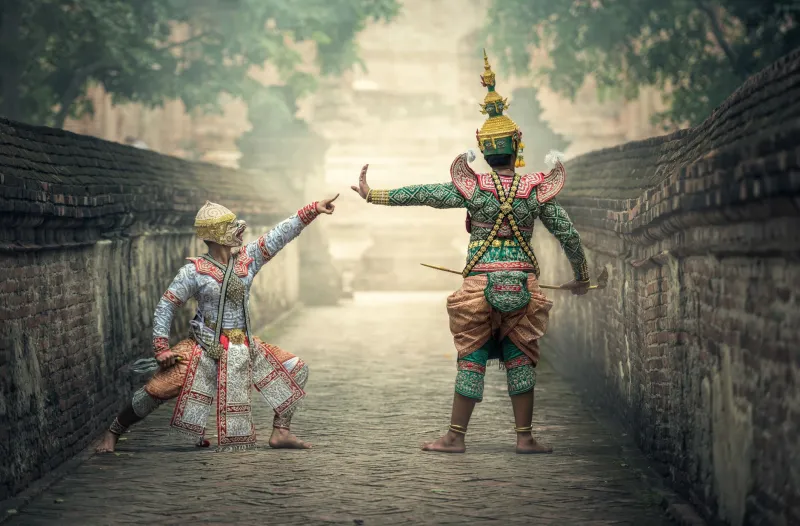
One of the signature moves in high-end Asian drama costuming right now is what might be called textile layering — the practice of building a single outfit from multiple fabric types, each with a different sheen, weight, and texture, so that the garment reads differently depending on how light hits it during a scene. It sounds technical because it is, but the viewer experience is almost subconscious. You just feel like what you're watching looks expensive in a way that goes beyond price tags.
Nirvana in Fire, the Chinese political drama that became something of a cult phenomenon among international streaming audiences, is still being dissected by costume enthusiasts nearly a decade after its release. Designers on that production worked with silk weavers to develop fabric blends that would photograph correctly under modern lighting while still reading as historically plausible. The result was a wardrobe that felt like it belonged to another world without ever feeling like a costume.
More recently, My Dearest from South Korea sent viewers into similar spirals. The Joseon-era clothing in that show was constructed using techniques that mirror historical methods — not because the production was trying to win an authenticity award, but because the designers argued, convincingly, that it's the only way to get the drape and movement right on camera.
Color as Character Development
American productions tend to use costume color in fairly broad strokes — the villain wears dark tones, the ingenue gets pastels, the antihero lives in grays. It works, but it's a blunt instrument.
Asian dramas, particularly those rooted in historical or fantasy settings, use color with a specificity that borders on a second screenplay. In many Korean historical dramas, the exact shade of blue or red worn by a court official signals their rank, their allegiances, and sometimes their emotional state within a single episode. Viewers who pick up on this — and plenty of US fans absolutely do, especially after a few Reddit deep-dives — find themselves watching episodes with a completely different layer of engagement. The clothes are telling a story that the dialogue isn't.
This extends into contemporary dramas too. The costuming in a show like My Mister or Something in the Rain uses muted, everyday clothing as a deliberate emotional signal — the absence of flash communicating something specific about character interiority that a more visually aggressive wardrobe would undercut.
The Rewatch Economy
Streaming platforms live and die by rewatch behavior, and costume design — particularly the obsessive, detail-dense kind coming out of Asian productions — is quietly one of the most powerful rewatch drivers in the business.
Fans of Alchemy of Souls, the Korean fantasy drama, have produced hundreds of hours of YouTube content dedicated entirely to breaking down the symbolic meaning of costume changes across the series. Wardrobe choices that seemed decorative in first viewing turn out to be foreshadowing plot developments that won't pay off for several episodes. That kind of discovery rewards rewatching in a way that keeps titles alive in the streaming ecosystem long after their initial release window.
For US audiences discovering Asian content through platforms like Viki, Kocowa, or the growing Asian content libraries on Netflix and Amazon, this depth of craft is often what converts a casual viewer into a committed fan. You watch one show for the story, you stay for the wardrobe, and six months later you're importing a book about traditional Korean textile arts because you've gone completely down the rabbit hole.
What Hollywood Could Actually Learn Here
The gap isn't uncloseable, but closing it would require a shift in how American productions think about costume research and cultural collaboration. The most visually arresting Asian dramas aren't just spending money on nice fabric — they're embedding costume design into the storytelling process from the earliest stages of production, treating wardrobe as a narrative tool rather than a finishing detail.
There are signs that some US productions are paying attention. The costume work on Shōgun — the FX adaptation that became one of 2024's most-discussed prestige dramas — drew heavily on Japanese textile expertise and was widely praised for a level of historical and cultural accuracy that felt different from previous Western attempts at similar material. Significantly, that production involved Japanese creative partners at a structural level, not just as consultants.
That collaborative model might be the real lesson here. The costume design coming out of Asian drama productions isn't magic — it's the result of creative ecosystems where the people making the clothes have a genuine, living relationship with the traditions they're drawing from.
The Bottom Line
The next time you find yourself pausing a Korean historical drama to get a better look at the embroidery on someone's sleeve, or rewinding a Chinese fantasy epic because you swear the empress's robe changed color between scenes and you need to figure out why — that's not a distraction from the show. That's the show working exactly as intended.
Asian drama costume designers aren't just dressing characters. They're building worlds, encoding meaning, and creating the kind of visual detail that keeps audiences coming back. On that particular battlefield, the thread count is winning.