Nobody's Background Character: How Asian Dramas Turn the Whole Cast Into the Main Event

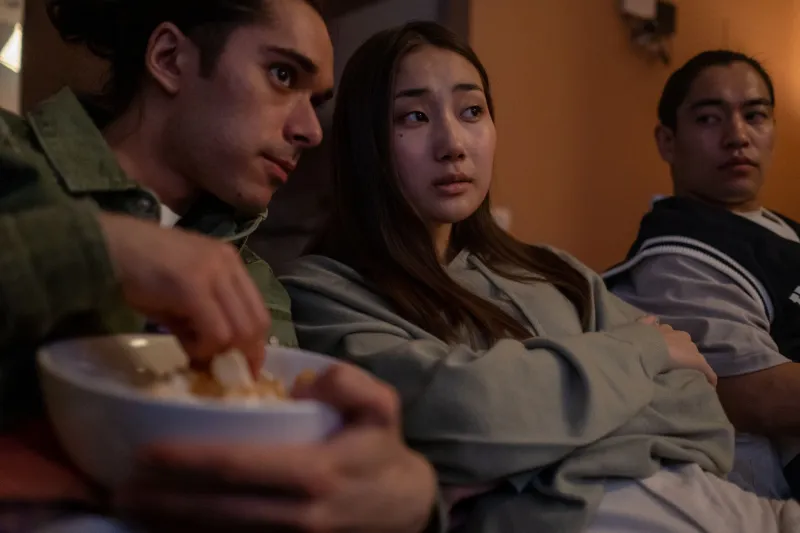
There's a moment in Crash Landing on You that has nothing to do with Hyun Bin or Son Ye-jin. It involves a group of North Korean soldiers gathered around a small television, watching a South Korean soap opera with the kind of wide-eyed wonder usually reserved for children on Christmas morning. It's funny, it's tender, and it tells you everything you need to know about who these men are — their longing, their curiosity, their humanity. And here's the thing: these guys are technically the supporting cast.
That scene alone has more emotional texture than entire seasons of certain American ensemble dramas. It's not an accident. It's a philosophy.
The Western Habit of Wasting Good Characters
Let's be honest about how supporting characters usually work in American television. The best friend exists to give advice and occasionally get a B-plot romance that fizzles before the season finale. The funny coworker drops one-liners and disappears. The villain's henchman is menacing in the background until the plot needs them gone. Even prestige TV — the kind that wins Emmys and gets thinkpieces written about it — tends to orbit one or two central figures, with everyone else rotating around them like planets around a sun.
The result? You might love a show's lead. But you probably couldn't tell a stranger much about the secondary characters' actual inner lives.
Asian dramas, particularly Korean ones, operate from a fundamentally different assumption: every person on screen deserves a story worth telling.
What 'Equal Narrative Weight' Actually Looks Like
Take Descendants of the Sun, another Korean drama that became a genuine international phenomenon. Yes, the central romance between Song Joong-ki and Song Hye-kyo is the main draw. But the show invests serious screen time in the relationship between their two best friends — characters who could have easily been comic relief or plot devices. Instead, they get their own arc, their own conflicts, their own slow-burn tension that mirrors and contrasts the main couple in interesting ways.
By the time that secondary romance pays off, viewers are just as invested as they were in the leads. That's not an accident of casting chemistry (though the chemistry helps). It's a structural decision made in the writers' room.
The North Korean soldiers in Crash Landing on You follow the same logic. Each one has a distinct personality, a backstory that emerges in fragments, and a relationship to the story's central themes — loyalty, sacrifice, the absurdity of political borders between people who are fundamentally the same. They're not props. They're people.
Why This Makes Shows More Addictive
Here's the rewatch math that American producers should probably be paying attention to: when you care about multiple characters at different levels of the story, every scene has potential value. You're not fast-forwarding through the parts that don't feature your favorite character. You're watching everything, because everything might matter.
This also creates a specific kind of word-of-mouth energy. Think about how people talk about their favorite Asian dramas online. It's rarely just "I love the main couple." It's "the friendship between X and Y destroyed me" or "the scene where the side character does this thing wrecked me for a week." Supporting characters become fandoms unto themselves. They generate fan edits, fan fiction, dedicated social media accounts. They extend a show's cultural lifespan well beyond its final episode.
For streaming platforms competing in an increasingly crowded market, that kind of sustained engagement is basically gold.
The Craft Behind It
So how do Asian drama writers actually pull this off? A few things seem to be consistently at work.
Longer episode counts with deliberate pacing. A typical Korean drama runs 16 episodes, which sounds like less than an American network season but is actually used more efficiently. There's room to let secondary characters breathe, to give them scenes that aren't purely functional to the main plot.
Thematic mirroring. Supporting characters in Asian dramas often exist in deliberate thematic relationship to the leads — reflecting, contrasting, or complicating the central story's ideas. The soldiers in Crash Landing on You aren't just charming sidekicks; they embody the show's core argument about human connection overriding political division.
Emotional specificity in small moments. A character eating a particular food with a particular expression. A habit that reveals a backstory without explaining it. Asian dramas are remarkably good at making you feel like you know someone from a handful of carefully chosen details — and they apply that skill to the whole cast, not just the leads.
What American Producers Could Actually Learn
The lesson here isn't that American TV should start importing Korean drama structure wholesale. Cultural context matters, and what works in a 16-episode Korean drama doesn't automatically translate to a 10-episode streaming series or a 22-episode network procedural.
But the philosophy is transferable: treat your supporting characters like they have lives that exist outside of serving your protagonist's story. Give them desires that don't revolve around the main plot. Let them surprise you — and the audience.
Some American shows have figured this out. Abbott Elementary builds genuine ensemble depth. The Bear turned its supporting cast into one of the most talked-about ensembles in recent memory. These shows get rewatched, dissected, and loved in ways that protagonist-centric storytelling rarely achieves.
But these are still exceptions. The default remains: leads carry the weight, everyone else fills the frame.
The Bigger Picture
At Shanxi Stream, we spend a lot of time thinking about why Asian entertainment has built such a passionate audience in the US over the past decade. The subtitles argument has been relitigated to death. The "exotic appeal" explanation is both lazy and wrong.
The real answer might be simpler: Asian dramas respect their entire cast. And when you respect your entire cast, you end up with a world that viewers actually want to live in for a while — not just a story they consume and forget.
When the soldiers in Crash Landing on You get their own episode essentially to themselves, it's not a detour from the good stuff. It is the good stuff. That's the shift in thinking that changes everything.
And once American audiences experience storytelling that treats every character like they matter, going back to the background-furniture approach starts to feel like settling.