When the Sky Does the Talking: A Field Guide to Weather as a Love Language
When a drama wants you to feel something, it rarely writes a speech. It calls in the weather.
Think about it. The confession that matters most is usually delivered in rain. The grief sinks in during the first snow. The tension isn't a shouting match, it's a metal fan clicking uselessly in a room that's too hot, and two people who have suddenly run out of things to say to each other.
On a streaming app, this is what separates a scene you skip from a scene you rewind. Weather in Asian drama isn't decoration. It's structure — a visual language that does work dialogue would only explain.
The downpour rule
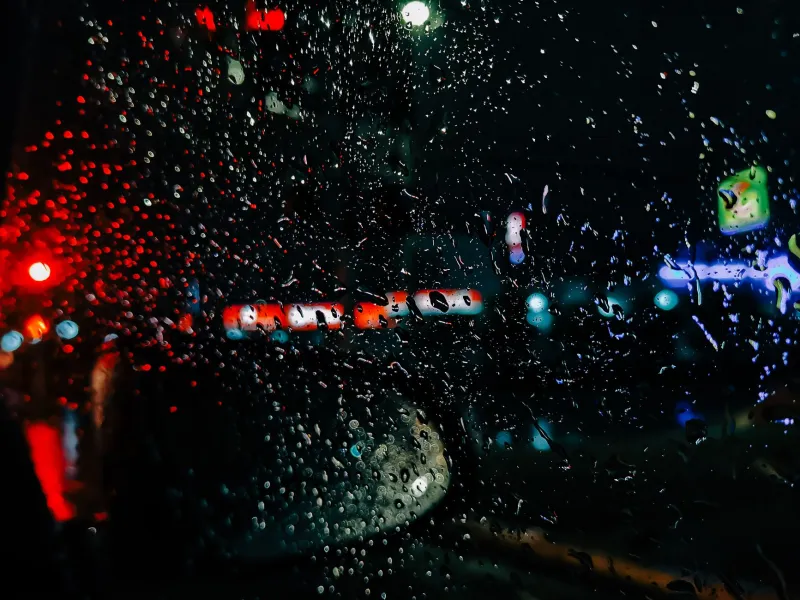
The umbrella is the single most overworked prop in the genre, and it earns every second of screen time. A downpour forces a specific choreography: two people under one canopy, shoulders pressed, neither able to leave without being rude. It's a social pressure cooker disguised as bad luck.
The genius move is usually the gap. The umbrella covers one of them fully and the other one only partly. She notices. He doesn't fix it. That small asymmetry says more than a monologue — he's protecting her, she's letting him, and neither of them will say so out loud for another six episodes.
And then there's the rain nobody shelters from. Standing in it, letting the hair get ruined, letting the jacket go dark with water — that's a visual shorthand for a decision being made. The character has stopped caring about appearances. Something is about to change.
Heat, sweat, and the fan that stopped working
Cold-weather romance is easy. Hot-weather romance is honest.
When a drama lets a scene get hot, it strips everyone down to a version of themselves that can't be composed. Shirts stick. Hair refuses to cooperate. Manners slip. Heat is a great equalizer, and directors know that a conversation in an airless apartment reads completely differently from the same conversation in a café.
You'll notice this in workplace dramas especially. The fluorescent lights are on at ten at night, everyone's sleeves are rolled up, and the professional distance the characters have maintained all season quietly gives out. No score cue required. The room is doing it.
Wind, snow, and the finale that freezes
Snow does a very particular job in this genre: it removes color and noise from a frame, which is exactly what you want when a story is trying to make a single moment feel permanent. The first snowfall in a drama is practically part of the contract, and it almost always arrives with a promise attached — something said out loud that the character will spend the rest of the series honoring or regretting.
Wind is the underrated one. Scarf ends flapping, a door that won't stay shut, hair across someone's face at a funeral. It's a director's way of making a still scene feel unstable, like the air itself knows something's wrong.
Silence is a weather condition too
There's a recurring beat that a lot of newer viewers mistake for padding: two people on a bench or a low wall or a curb, saying nothing for a very long stretch. The camera doesn't cut away. The sound design stays quiet. Somewhere a scooter passes.
That's not a production falling behind schedule. That's the drama trusting you to sit in discomfort, or warmth, or grief, without narration. American TV tends to fill that space with a needle drop, usually a very on-the-nose song with a lyric that explains the plot. Asian dramas let the quiet hold, and the effect on a viewer is physical.
Why it crosses over so cleanly
American audiences have proven remarkably receptive to these sequences, and I think there's a simple reason: weather is untranslatable-proof. You don't need a cultural footnote to understand that someone is getting soaked for a person they love. The grammar is legible in any language, which is part of why these dramas subtitle so gracefully.
The other reason is that the scenes are patient. Streaming has trained us to expect a cut every few seconds. A thirty-second wide shot of rain hitting a courtyard runs against everything we've been taught about attention spans — and it works anyway.
How to watch for it
Next time you press play, keep an eye on the forecast. If it starts raining hard, pay attention to who gets the umbrella and who gets the edge of it. If it gets unseasonably warm, expect someone to say the thing they've been avoiding. If snow shows up in the final twenty minutes, bring tissues.
The sky is talking. You just have to let the subtitles catch up.